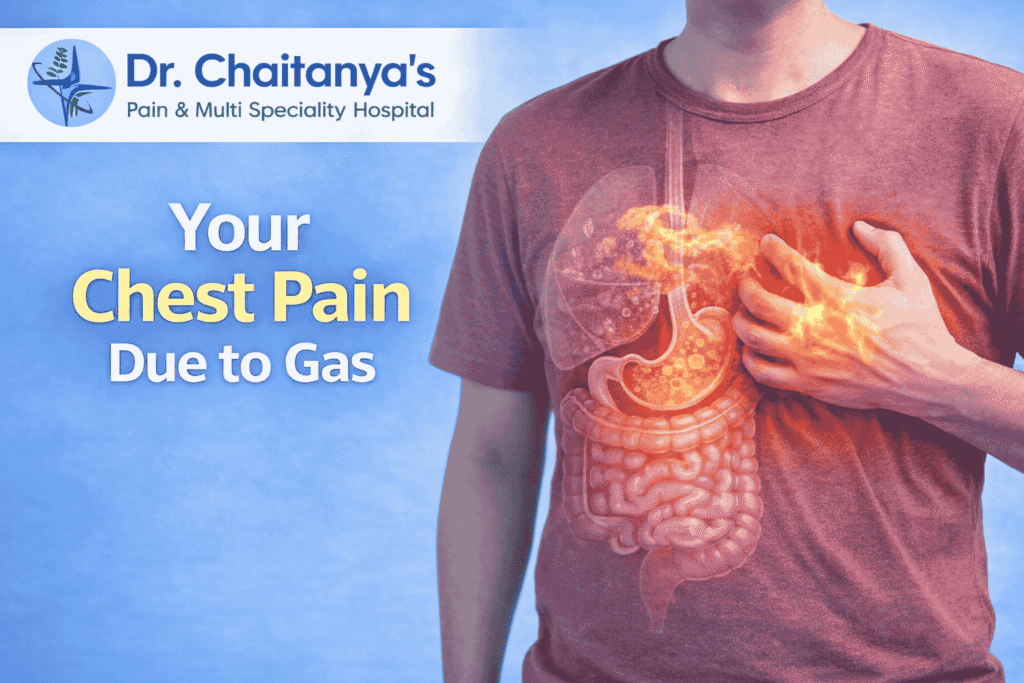
Chest discomfort can feel terrifying, and it’s a completely natural human reaction to immediately fear a serious heart problem. But, many people don’t realize that chest pain due to gas is actually a remarkably common cause of that pressing or sharp sensation. Trapped gas in the digestive system mimics cardiac pain so effectively it leaves many people anxious and unsure what’s truly going on.
Understanding this frequent condition is the first step toward staying calm, recognizing the signs accurately, and knowing precisely when a visit to Dr Chaitanya’s Pain & Multi speciality Hospital becomes necessary.
What Is Gas-Related Chest Pain, Really?
This type of discomfort starts when excess air or gas builds up inside your stomach or lower intestines. As this trapped gas expands, it literally pushes against the diaphragm or the chest wall. That pressure translates into the uncomfortable sensations you feel in your chest. The pain often feels sharp, sometimes stabbing, or just a heavy pressure right on the chest.
Because the sensation can feel exactly like a serious heart issue, patients quickly become alarmed.
Fortunately, in the vast majority of cases, pain coming from gas may be harmless. Still, knowing the cause and spotting the pattern helps prevent panic and ensures you don’t miss those rare moments when something more serious might be happening.
How to Spot Gas Pain vs. Heart Danger
It’s crucial to understand the difference. Gas pain is generally tied to digestion; heart pain is linked to circulation and muscle distress.
| Symptom Feature | Likely Gas-Related Pain | Red Flags (Seek Immediate Care) |
| Pain Quality | Sharp, stabbing, or cramp-like. | Crushing, heavy pressure, or squeezing. |
| Location/Spread | Localized to the center/upper chest or abdomen; may move. | Spreads (radiates) to the left arm, jaw, neck, or back. |
| Relief Factors | Improves after burping, passing gas, or changing body position (e.g., standing up). | Pain is persistent; it does not improve with rest or position changes. |
| Other Symptoms | Bloating, fullness, frequent burping, gurgling. | Accompanied by sweating, dizziness, light headedness, or sudden severe shortness of breath. |
If you experience any of the red flags, you must seek medical attention immediately. Never attempt self-diagnosis when a heart issue could be possible.
Common Causes of Gas Build-up
Several typical daily factors contribute to gas accumulation and that resulting chest discomfort:
Eating Habits:
Eating too fast, talking while eating, or drinking carbonated beverages swallows excess air. Overeating also contributes significantly.
Digestive Issues:
Underlying conditions like acid reflux (GERD), general indigestion, or Irritable Bowel Syndrome (IBS) frequently lead to persistent gas and bloating.
Lifestyle:
High stress, smoking, and a lack of physical activity can slow down your digestion, allowing gas to form and get trapped more easily.
Small adjustments—chewing slower, cutting back on sodas, and managing stress—can often drastically reduce the frequency of gas-related chest pain.
Managing Mild Gas Pain at Home
For mild discomfort clearly linked to food or posture, a few simple measures can provide relief:
Move Gently:
Walk around or perform light stretching. Movement encourages trapped gas to pass.
Avoid Triggers:
Temporarily cut out fried foods, carbonated drinks, and high-gas vegetables (like broccoli or beans).
Eat Small Meals:
Switch to smaller, more frequent meals to prevent the stomach from overloading.
Practice Relaxation:
Deep, slow breathing can sometimes relax the digestive muscles, easing stress-related gas issues.
When to Visit Dr Chaitanya’s Hospital
Even though most cases are harmless, persistent, severe, or unusual chest pain should always be evaluated by a medical professional. You need certainty.
Consulting a specialist at Dr Chaitanya’s Pain & Multi speciality Hospital is essential to definitively rule out serious cardiac or other gastrointestinal conditions. Our team provides comprehensive evaluations, using precise diagnostics to distinguish between digestive causes, muscle strain, and cardiac issues.
We prioritize patient comfort and provide expert guidance for accurate diagnosis and safe care.
CONCLUSION
Chest pain due to gas is common but causes understandable anxiety. By recognizing the differences between digestive discomfort and heart warning signs, you can manage the condition calmly. Remember: if the pain is severe, persistent, or comes with alarming symptoms, you must seek professional evaluation.