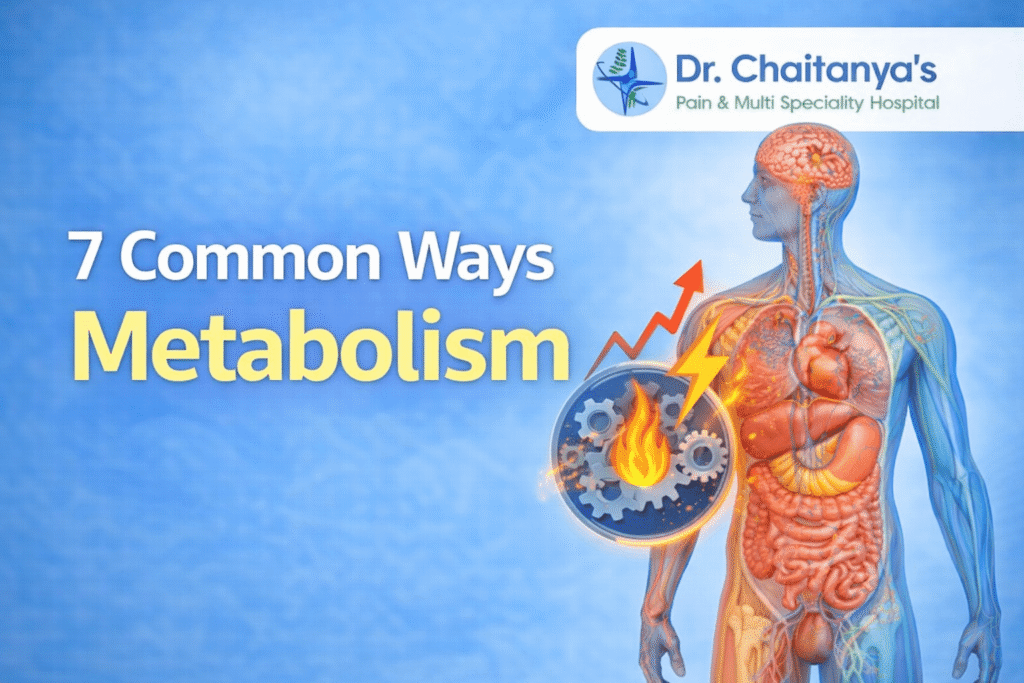
Have you ever felt like your body’s internal engine is just idling, no matter how much you try to rev it up? If you’re trying to understand the 7 common ways metabolism slows down, you’re not alone. Metabolism is a word we hear all the time, but we rarely stop to think about what it actually means for our daily energy and wellbeing.
In simple terms, metabolism is the process your body uses to turn what you eat and drink into energy. When that process is working smoothly, you tend to feel steady, active, and balanced. But when it begins to slow, even simple routines can feel exhausting.
Recognizing these early changes can help you take more informed steps toward better health. At Dr. Chaitanya’s Pain & Multi speciality Hospital in Hyderabad, we see many patients experience persistent fatigue. They often feel like they are doing everything “right,” yet their stamina remains low.
In many cases, contributing factors may include small, quiet habits that have accumulated over time, creating a metabolic environment that favors storage over burning.
- Skipping Meals Regularly
It seems logical—if you eat less often, you should lose weight, right? Unfortunately, the body is much smarter than that. When you skip meals, you are essentially sending a “scarcity” signal to your brain. Your body doesn’t know you’re just busy; it thinks food is hard to find.In response, your system tries to protect you by slowing down how quickly it burns calories. Over time, these irregular patterns teach your body to become very efficient at storing energy as fat rather than using it to power your day
- Extremely Low-Calorie Diets
Going on a “crash diet” can backfire significantly. When you drop your calorie intake too low for an extended period, your body enters a state of metabolic adaptation. It starts to prioritize basic survival functions, like keeping your heart beating, while shutting down energy–using processes like building muscle or maintaining high body temperature.
In some individuals, this adaptation may persist even after normal eating resumes.
- Loss of Muscle Mass
Think of your muscles as the “furnace” of your metabolism. Muscle tissue is metabolically active, meaning it burns calories even when you are at rest.As we age, or if we are inactive due to injury, we naturally begin to lose muscle mass. When that furnace gets smaller, the amount of energy you burn at rest drops. This is why strength-based movement plays an important role; without it, the body may gradually become less efficient at processing energy in many people.
- Prolonged Physical Inactivity
Many of us have desk jobs where we sit for eight hours a day. Even if you hit the gym for thirty minutes, those hours of sitting can quietly put your metabolism to sleep.This isn’t just about the calories burned during a workout; it’s about keeping your metabolic enzymes active. When you stay still for too long, your body’s ability to break down fats and sugars may slow over time.
- Poor Sleep Quality
We often think of sleep as “down time,” but for your metabolism, it is “maintenance time.” Sleep is closely tied to the hormones that regulate hunger (ghrelin) and fullness (leptin).When you don’t get enough high-quality sleep, these hormones get thrown out of balance. You might find yourself craving high-sugar foods because your brain is looking for a quick fix to make up for the lack of rest.
- Chronic Stress
In short bursts, stress is a survival tool. But when stress becomes chronic, it keeps the hormone cortisol elevated. High cortisol levels act as a signal to your body to store fat for an “emergency.” It tells your system to conserve energy instead of burning it.
When you combine high stress with poor sleep, it may contribute to metabolic slowdown.
- Aging and Hormonal Changes
As the years go by, our cellular function naturally slows down, and hormone levels—like estrogen, testosterone, and thyroid hormones—begin to shift. While this is a normal part of life, some shifts are more severe.For instance, thyroid-related issues can affect overall metabolic function. Regular medical check-ups are vital for catching these imbalances early.
Frequently Asked Questions
- Can I “fix” a slow metabolism?
Yes, these strategies may help spport metabolic efficiency over time.
- Does drinking cold water really help?
It provides a tiny, temporary boost as your body warms the water, but it’s not a long-term solution.
- How do I know if my thyroid is the issue?
These symptoms may be associated with thyroid concerns and should be evaluated through medical testing.
- Is metabolism purely genetic?
Genetics play a role, but lifestyle factors like activity and sleep have a massive influence on the results.
- Does eating spicy food work? Chili can slightly increase metabolic rate for a short time, but it’s not as effective as building muscle.
CONCLUSION
Metabolic changes usually happen so slowly that you don’t even notice them until you feel “burnt out.” By understanding the 7 common ways metabolism slows down, you can start making small, informed shifts. If you are struggling with unexplained fatigue, it may be time for a professional evaluation to see if there is an underlying hormonal factor.